
People and Their Elephants
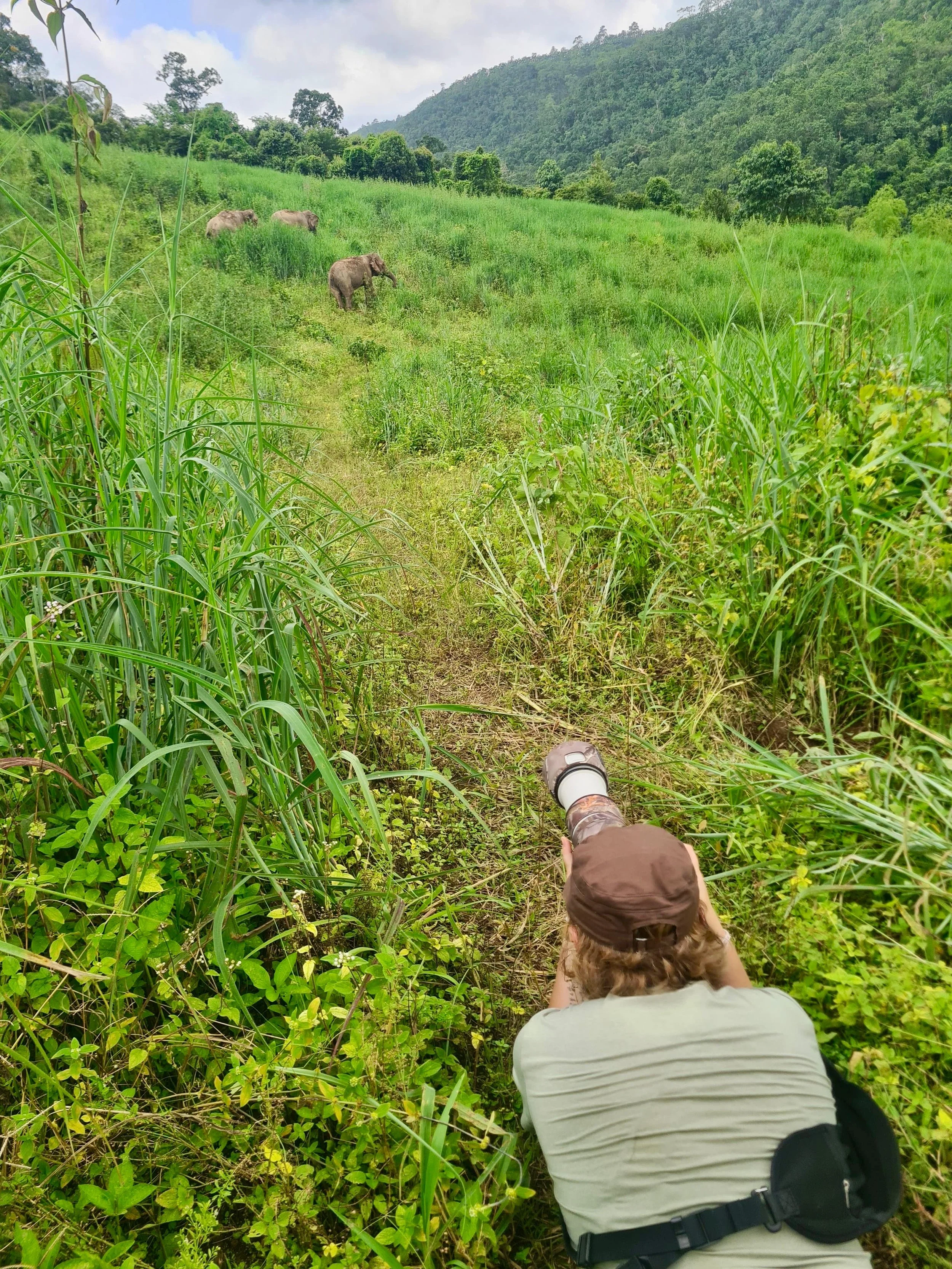
By Julija - 3 week intern
We all have expectations. It is like setting a bar and measuring everything we encounter against it.
Here I am at Kindred Spirit Elephant Sanctuary, and soon it will be time for me to leave. As much as I try to keep an open mind towards different experiences and cultures, I certainly came here with expectations. So, where am I now, at the end of my stay?
I came here as a photography intern. The word “intern” being applied to me seemed a little strange at first. I had always associated it with young adults who are at the beginning of their careers or still looking for their direction in life. Usually, they have just finished school or university. I definitely cannot place myself in that category.
At first, I thought I might simply change the word to “volunteer.” That felt more accurate. But now I have come to realise that “intern” actually fits better. I just had to reframe it.
Why intern? Because the word places more emphasis on learning. And this experience has been about learning – about elephants, people, different cultures, privilege and resilience.
It has not been only about photography. I am not sure that I have learnt many new things about the technical side of my craft here. However, every unfamiliar environment presents new challenges and pushes your boundaries. More importantly, I have had so many interesting conversations and met people from different parts of the world. All of this is helping me become a better storyteller.
I want to encourage everyone, even if you are 50 or 80 years old, not to be frightened by the word “intern.” Come here, embrace it, learn and allow yourself to gain a completely different kind of experience.
I cannot fit all the stories I want to tell about my time here into one blog post. It is not going to become a book either, but it deserves a series of stories that I will publish over time. And those stories will not simply be about elephants. They will be about people and their elephants.
Yes, I am convinced that people should come first in any conservation effort. If we remain open-minded, collaborate and support local communities – not by trying to change their way of life, but by complementing it – then nature and wildlife can thrive too.
This was one of my expectations when I came here: to see an example of this approach in practice. My bar was set high because there are not many places in the world that manage to achieve it.
It is much easier to become the “white saviour” – the knight on a white horse who arrives to save the animals. It sounds noble and probably feels good, but it does not create trust or lasting change. I think we need fewer rescuers and more changemakers.
KSES is exactly that.
I saw a strong bond between the project and the local community. The relationship is built on trust, respect and taking care of their own – whether that means people, dogs or elephants.
The community benefits considerably from the project’s presence. It has created new business opportunities, especially for women, as well as jobs and new possibilities that do not require people to abandon their way of life or their culture.
As a result, it has also helped create a high standard of welfare for the elephants. Although they remain under human care, they can spend their lives in a natural environment, roaming the forested hills of northern Thailand.
